SWLA PHOTO / JOURNAL
Why I Stopped Posing People
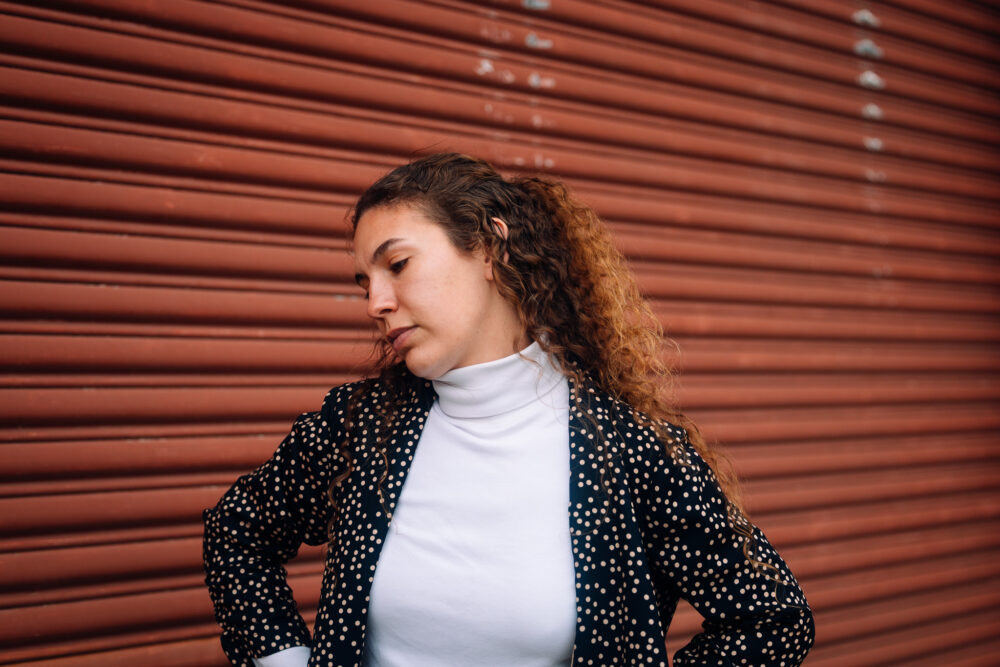
Why I Stopped Posing People
And what I do instead.
I used to pose people. That is how I was trained. That is how most photographers work. You tell someone where to stand, how to tilt their head, what to do with their hands. You click the shutter. Done.
It always felt off. For me and for them.
So I stopped doing it that way. I still direct when I need to. But I do not pose. There is a difference, and it changes everything about how a session feels and what the final images look like.
What Posing Looks Like
You have probably experienced this. You show up for photos and the photographer starts rattling off instructions:
“Stand here. Turn your shoulders this way. Tilt your chin down. No, a little more. Put your hand on your hip. Other hip. Okay now smile. Hold it.”
Click.
“Now turn to the left. Cross your arms. No, higher. Relax your face. Okay smile again.”
Click.
This is posing. The photographer has a mental checklist of positions they want to hit, and their job is to move you into those positions like a mannequin. Your job is to follow instructions and try not to look as awkward as you feel.
It is mechanical. Transactional. And the results usually look that way too.
Why It Does Not Work
When you tell someone exactly what to do with their body, they stop being themselves. They become a person trying to hold a position. Their focus shifts from the conversation to the mechanics of their limbs. Am I doing this right? Is my hand in the right place? Should I be smiling more?
That mental load shows up in the photo. The smile looks forced because it is forced. The posture looks stiff because they are thinking about their posture instead of just existing.
Forced body language looks forced. Every time.
And here is the thing. Your natural body language is more powerful than any pose I could put you in. The way you actually stand, gesture, and move communicates trust and authenticity in a way that staged positions never can. When I override that with a checklist of poses, I am throwing away your best asset.
The Shift
At some point I realized I was fighting against the thing that actually makes photos work. I was overriding natural body language with artificial positions and then wondering why the results felt lifeless.
So I stopped posing and started directing instead.
These might sound like the same thing. They are not.
Posing vs Directing
Posing tells someone exactly what to do with their body. Stand here. Put your hand here. Tilt your head this much. It is prescriptive and rigid.
Directing guides someone toward a position or feeling without locking them into a specific stance. It gives them room to move naturally while gently steering them where I need them to be.
Posing treats the client like a prop. Directing treats them like a person.
What Directing Looks Like in Practice
During a session, I am not standing behind the camera barking instructions. I am in the conversation. We are talking about their work, their life, whatever comes up. My camera is out, but the focus is on the interaction, not the mechanics.
Most of my images are completely unposed. They happen in the natural flow of conversation. I see a moment, I capture it. The client does not even realize I took the shot.
But sometimes I need a small adjustment. Maybe they are in an almost perfect position and I just need a minor tweak to take it over the top. That is when I direct.
Here is what that sounds like:
Instead of: “Turn your head 15 degrees to the left.”
I say: “Look at that sign over there for a second.”
Same result. Completely different experience. They are not thinking about the angle of their face. They are just looking at a sign. Their body moves naturally, and I get the shot.
Or we are walking and I spot an unexpected texture on a wall. Instead of saying “Go stand against that wall and put your shoulder here,” I just guide them into the space. “Let’s move over here for a second.” They shift naturally. I capture the moment.
The direction is minimal. Short phrases. Small nudges. The client stays in the flow of the conversation instead of snapping into performance mode.
Why This Matters
The goal of a portrait is to show who someone actually is. Not a performance. Not a rehearsed stance. The real person.
When you pose someone, you get a photo of someone holding a pose. When you direct someone, you get a photo of them being themselves with a slight adjustment you made invisibly.
The first looks like a stock photo. The second looks like a person you want to know.
Trust is built through authenticity. If your photos look staged, people feel it, even if they cannot explain why. If your photos look real, people connect with them. They feel like they already know you before they have ever met you.
That is the difference between a forgettable headshot and one that actually works.
What Clients Experience
When you book a session with me, you will not hear a list of poses. You will hear a conversation.
We will talk. I will move around you, capturing moments as they happen. Occasionally I will give you a small direction. Look over there. Step into this light. Turn toward me a bit. But you will never feel like you are being arranged.
Most clients finish a session and say something like “That was way easier than I expected” or “I forgot we were even taking photos.” That is the goal.
The photos look natural because the process was natural. You were not performing. You were just being yourself, and I captured it.
The Real Reason I Changed
Honestly, I stopped posing people because it was awkward for me too.
Standing there giving commands felt wrong. Watching someone struggle to hold an unnatural position felt wrong. Looking at the results and seeing stiff, lifeless images felt wrong.
I got into photography to create something real. Posing people was not getting me there. Directing does.
I call this approach Conversational Photography. We talk, you relax, I capture the real moments. When I need to adjust something, I direct with short phrases that keep you in the flow. The result is photos that look like you because they actually are you.
Is This for You?
If you have ever dreaded a photo session because you hate being posed, this is a different experience.
If you have ever looked at your professional photos and thought “that does not even look like me,” this fixes that.
If you want photos that feel real instead of staged, we should talk.
I offer headshot and branding sessions starting at $250. I also offer lifestyle and editorial sessions for creatives who want something moodier. Both use the same approach. Conversation over commands. Directing over posing. Real over rehearsed.
I am based in Lake Charles, Louisiana and work throughout Southwest Louisiana. All sessions are on-location.
If you want to see what happens when you stop posing and start talking, reach out.
About the Author
Dalton Barron is a portrait and branding photographer based in Lake Charles, Louisiana. He has been behind a camera for 13 years and specializes in working with people who want photos that actually feel like them. His approach, Conversational Photography, skips the stiff poses in favor of real interaction and natural results. He also photographs weddings under a separate brand at thefadedlens.com.
Dalton is a partner of Visit Lake Charles, supporting local tourism and business in Southwest Louisiana.
Ready for a Different Experience?
No poses. No awkward instructions. Just conversation and real results.
Planning your own session?
Explore headshots, brand photography, and editorial portraits with Dalton.
Tell me what you have in mind ↗